Reporting
Prepare a stock compensation expense report
Set valuation assumptions, select a fiscal period, and review Cap Table stock compensation expense, forfeiture reversals, and unrecognized cost.
On this page
Prepare the award and valuation records
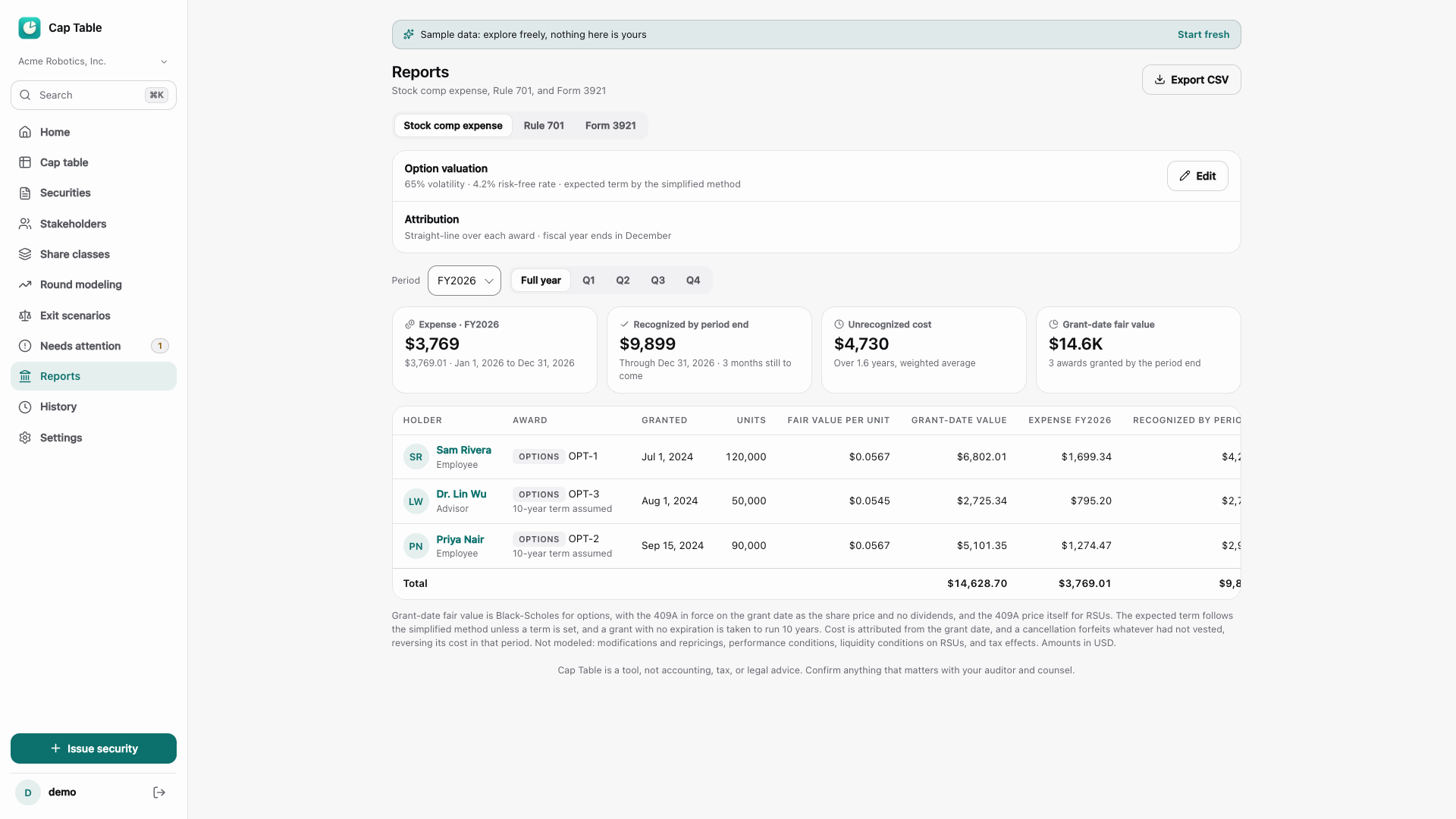
Open Reports and select Stock comp expense. This report calculates expense for recorded options and RSUs. Check grant dates, quantities, vesting, cancellations, option strikes, and expirations first. Record the valuation covering each grant date under Settings.
The report supports review of US stock-based compensation under ASC 718 using the app’s valuation and attribution conventions. It does not determine whether every award is within that accounting model or prepare financial statements.
Set the company’s reporting assumptions
Use Edit on the assumptions card. Enter expected volatility and the risk-free rate as percentages, such as 60 for 60%. Choose a fixed expected term in years or the simplified method, then choose straight-line or graded attribution and the fiscal year-end month.
Options require positive volatility to run the report. RSU-only records do not need option-pricing assumptions. The app uses Black-Scholes for options, with no dividends, and recorded grant-date share FMV for RSUs. Select assumptions appropriate to the awards with your accounting reviewer. The SEC’s SAB 110 explains conditions on using a simplified expected term; availability of the setting does not establish eligibility.
Review the period and exceptions
Select the fiscal year and either the full year or a quarter. Review grant-date fair value, expense in the selected period, cumulative expense, unrecognized cost, and the remaining recognition period.
A cancellation can produce a negative period expense when previously recognized cost for forfeited unvested units is reversed. Expiration of an earned, vested option is a different event.
Read every valuation note. Without grant-date FMV, the option calculation can use strike as a fallback; an RSU without FMV is unvalued. Without a usable option expiration, the model assumes a ten-year contractual term. Resolve these inputs before treating the output as a completed accounting schedule.
Export the report with its assumptions
Select Export CSV. Keep the exported assumptions and award notes with the numbers. Changing company assumptions later recalculates the report, so save the reviewed version and its supporting records.
For awards with performance conditions, liability treatment, modifications, or other terms beyond the model, determine the appropriate treatment outside this schedule. See Calculation methods and limits before reconciling to the ledger.